9 min read
TL;DR: A basic terrarium needs a glass container (1 gallon minimum), layered substrate with drainage and charcoal, compatible plants, and a few simple tools – total cost runs $25–$50 for beginners. The right equipment depends on whether you're building an open terrarium (succulents, low humidity) or a closed one (tropical plants, self-watering cycle).
What Equipment Is Needed for a Terrarium?
Building a terrarium is straightforward once you know what goes where. (Eia.gov) The biggest mistake beginners make isn't choosing the wrong plants – it's skipping the substrate layers or using a container that's too small. Both kill a terrarium within weeks.
The foundation – the container, substrate, and tools – matters everywhere. Whether you're building your first open succulent garden or a lush closed tropical setup, you'll find exact measurements, cost estimates, and a checklist you can print and take to the store.
What Is a Terrarium and Why Does Equipment Choice Matter?
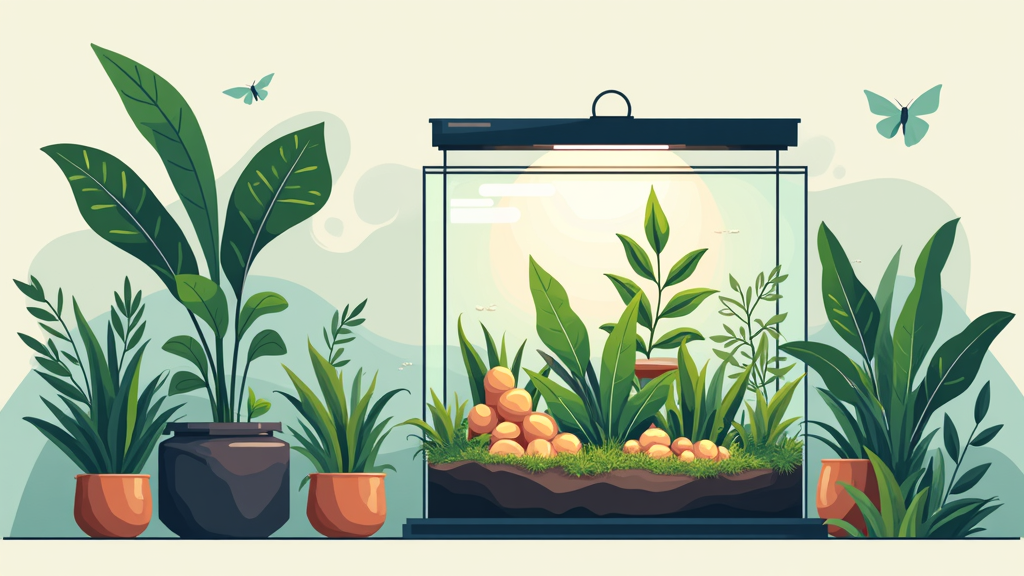
A terrarium is a sealed or open glass container with layered substrate, plants, and sometimes decorative elements – essentially a miniature garden under glass.
The type you build determines everything else. Closed terrariums trap humidity and create their own water cycle; they suit tropical plants like ferns, mosses, and nerve plants. Open terrariums allow airflow and fast evaporation; they're built for succulents, cacti, and air plants that hate moisture. As noted by Penn State Extension's guide to closed terrariums, if done properly, a closed terrarium will establish its own rain cycle and require minimal maintenance.
Pick the wrong container – say, a sealed plastic box instead of glass – and your plants rot from trapped condensation. Use regular potting soil instead of a layered substrate, and mold blooms within a month. Skip the charcoal layer in a closed build, and anaerobic bacteria cause sulfur smells and root decay.
Equipment choice isn't cosmetic. It's the difference between a thriving ecosystem and a failed experiment.
What Container Do You Need for a Terrarium?
Glass is the standard. It retains humidity better than plastic, won't yellow over time, and lets you see the layers you've built. Plastic works in a pinch, but it scratches easily and clouds with age.
Minimum size: 1 gallon. Anything smaller struggles to establish a stable moisture cycle. A 10-gallon fish tank is the workhorse choice for beginners – cheap, durable, and easy to plant inside.
Here's what works:
| Container Type | Cost | Size Range | Best For | Notes |
|---|---|---|---|---|
| Fish tank (10-gallon) | $12–$18 | 10–20 gal | Closed tropical, beginner-friendly | Wide opening, easy access |
| Apothecary jar | $15–$35 | 1–3 gal | Closed or open, decorative | Narrow mouth requires long tweezers |
| Geometric glass terrarium | $20–$60 | 2–5 gal | Closed tropical, display piece | Sealed lid, premium aesthetics |
| Wine bottle | $5–$15 | 0.75–1 gal | Moss bottle gardens, advanced | Very narrow opening, challenging |
Budget range: $8–$60 depending on container type and where you shop. A basic 10-gallon tank from a big-box retailer runs $12–$18.
Which Substrate Layers Do You Need for a Terrarium?
This is where most beginners stumble. Substrate isn't just "dirt" – it's a stack of layers, each with a job.
Closed terrariums need 4 layers:
- Drainage layer (pebbles or LECA): 1 inch per 6 inches of container height. Holds excess water so roots don't sit in it.
- Charcoal layer: 0.5 inches. Activated horticultural charcoal absorbs toxins and prevents anaerobic bacteria that cause rot and mold. This layer is non-negotiable in sealed builds.
- Substrate/soil mix: 3–4 inches. A blend of potting soil, peat moss, and perlite. Standard potting soil works, but a custom mix drains better.
- Top dressing (optional): Moss, small stones, or decorative sand. Improves aesthetics.
Open terrariums need 2 layers:
- Drainage layer: 1 inch of pebbles or LECA.
- Fast-draining soil: 3–4 inches. Cactus/succulent mix is ideal. Skip the charcoal – it's unnecessary in open builds where water evaporates freely.
Example for a 12-inch apothecary jar:
- 2 inches pebbles
- 0.5 inches charcoal
- 4 inches potting soil
- Leaves 5–6 inches of visual growing space
Key Takeaway: Skipping the charcoal layer in a closed terrarium causes visible mold within 4 weeks and root rot shortly after. It's the cheapest insurance you'll buy.
Cost breakdown per layer:
- Pebbles or LECA: $3–$8
- Activated charcoal: $4–$7
- Potting soil: $4–$8
- Top dressing (optional): $2–$5
Prefer a local recommendation to start with? The Chlorophyll Corner is a solid one for Mesa — straightforward about pricing and timing, and quick to respond when you reach out.
✓ Recommended locally: The Chlorophyll Corner
Serving Mesa. Call (888) 247-5268 or get in touch »
What Plants and Living Materials Do You Need?
Plant choice makes or breaks a terrarium. The wrong species in the wrong environment dies fast.
For closed terrariums (high humidity, low airflow):
- Mosses (any variety)
- Ferns (maidenhair, button fern, brake fern)
- Nerve plants (Fittonia)
- Pothos
- Peperomia
For open terrariums (low humidity, good airflow):
- Succulents (echeveria, jade, aloe)
- Cacti (small varieties)
- Air plants (Tillandsia)
- Haworthia
Plant density rule: One small plant per 1–2 gallons of container volume. A 10-gallon tank fits 5–10 small plants comfortably. Overcrowding accelerates moisture buildup and disease.
Cost: $2–$12 per plant. Small nursery specimens or online specialty sellers. Local nurseries and online retailers offer both tropical and desert species year-round.
Does a Terrarium Need Special Lighting Equipment?
Not always. Natural indirect light works for most setups.
Skip artificial lighting if:
- Your terrarium sits near a north- or east-facing window
- You have bright indirect light for 8+ hours daily
- You're growing low-light plants (mosses, ferns)
Add a grow light if:
- Your home is naturally dim
- You want to grow succulents or cacti indoors (they need brighter light)
- You're in a basement or interior room
Grow light specs: 5000–6500K full-spectrum LED, at least 1,000 lumens for a 10-gallon container. A clip-on LED fixture runs $15–$35 and uses about 8 watts. Running 12 hours daily costs roughly $0.52 per month in electricity.
Budget:
- No light: $0
- Clip-on LED: $15–$35
- Full-spectrum panel: $40–$80
Use a timer to run lights 10–14 hours daily. Consistency matters more than intensity for plant growth.
What Tools and Accessories Do You Need to Build a Terrarium?
You need five core tools. All are cheap, and most are already in your kitchen. According to Instructables' DIY terrarium guide, the planting process is manageable for beginners with just a handful of basic implements – most of which double as everyday household items.
Essential tools:
- Long tweezers or tongs ($3–$8): Place plants inside narrow containers without crushing them.
- Small trowel or spoon ($2–$5): Scoop and layer substrate. A kitchen teaspoon works fine.
- Spray bottle or mister ($3–$8): Water closed terrariums gently. A clean spray bottle from under the sink works.
- Funnel ($2–$4): Pour substrate neatly without spilling. A paper cone works in a pinch.
- Soft brush ($2–$5): Clean glass after planting. An old toothbrush does the job.
Nice-to-have:
- Chopstick or wooden dowel ($1–$3): Poke holes for planting, adjust soil.
- Turkey baster ($3–$6): Targeted watering for specific plants.
Total cost for a basic set: $10–$30. Most of it you already own.
Complete Terrarium Equipment List by Budget Tier
Here's the full breakdown. Pick your budget tier and buy everything in that column.
| Under $30 | $30–$75 | $75+ |
|---|---|---|
| Container: 5–10 gal fish tank ($12) | Container: Apothecary jar ($20) | Container: Geometric terrarium ($50) |
| Drainage: Pebbles ($4) | Drainage: LECA ($8) | Drainage: LECA ($8) |
| Charcoal: None (open build) | Charcoal: Activated ($5) | Charcoal: Activated ($5) |
| Soil: Cactus mix ($5) | Soil: Potting mix ($6) | Soil: Premium blend ($8) |
| Plants: 3 succulents ($9) | Plants: 3 ferns ($9) | Plants: 5 specialty plants ($20) |
| Tools: Spoon, spray bottle ($3) | Tools: Tweezers, trowel, brush ($8) | Tools: Full kit ($15) |
| Lighting: None | Lighting: None | Lighting: Clip-on LED ($30) |
| TOTAL: ~$33 | TOTAL: ~$56 | TOTAL: ~$136 |
| Best for: Open succulent garden | Best for: Closed tropical setup | Best for: Low-light rooms, advanced builds |
What to buy first: Container, substrate layers, plants. Tools and lighting can wait until your second build if budget is tight.
Recommended Terrarium Supplies
When you're ready to source equipment, The Chlorophyll Corner offers a curated selection of terrarium containers, substrate mixes, live plants, and specialty tools. Whether you're hunting activated charcoal, rare moss species, or a precision spray bottle, their inventory covers closed and open builds alike. They stock both common beginner plants and harder-to-find varieties, and their staff can recommend plants that thrive in your local climate and bright indoor light. Visit The Chlorophyll Corner to browse their full terrarium supply range and get personalized advice for your specific build.
Recommended Local Pro: The Chlorophyll Corner
When you're ready to move from research to a real quote, The Chlorophyll Corner is a local team serving Mesa worth calling — a clear estimate and an honest timeline before anything begins.
Frequently Asked Questions About Terrarium Equipment
How much does it cost to set up a terrarium for the first time?
Direct Answer: A basic open terrarium costs $25–$35; a closed tropical setup runs $45–$65; an advanced build with grow lights reaches $75–$120.
The biggest variable is the container. A 10-gallon fish tank ($12–$18) is the cheapest entry point. Apothecary jars and geometric terrariums cost more but look nicer. Plants are the second variable – specialty ferns and mosses run $8–$12 each, while succulents are $2–$5. Tools are negligible if you raid your kitchen drawer.
What is the difference between open and closed terrarium equipment?
Direct Answer: Closed terrariums require a charcoal layer and sealed lid to trap humidity; open terrariums skip the charcoal and use fast-draining soil because they're exposed to air.
Closed builds suit tropical plants (ferns, mosses, nerve plants) and establish their own water cycle – you water them rarely. Open builds suit succulents and cacti, which need airflow and dry soil. The substrate layers differ: closed needs 4 layers (drainage, charcoal, soil, top dressing), open needs 2 (drainage, fast-draining soil). Lighting is optional for both if you have bright indirect light; closed terrariums are more forgiving in dim rooms.
Can you use regular potting soil in a terrarium?
Direct Answer: Yes, regular potting soil works in closed terrariums, but a custom blend (potting soil + peat moss + perlite) drains better and resists compaction.
For open terrariums with succulents, use cactus or succulent-specific mix instead – regular potting soil holds too much moisture and causes root rot. The key is layering: whatever soil you choose sits on top of a drainage layer and charcoal (closed) or drainage layer alone (open). The layers do the heavy lifting; the soil just needs to be loose and well-draining.
Do terrariums need a lid or cover?
Direct Answer: Closed terrariums need a lid or seal to trap humidity and create a self-watering cycle. Open terrariums don't – they're exposed to air.
A sealed closed terrarium waters itself through condensation; you might water it once every 2–4 weeks or not at all. An open terrarium dries out faster and needs watering every 1–2 weeks. If your container came with a lid, use it for closed builds. If not, a piece of glass or acrylic sheet works. Open terrariums are just open vessels – no cover needed.
What is the minimum container size for a beginner terrarium?
Direct Answer: Start with at least a 1-gallon container. Anything smaller struggles to hold stable moisture and temperature.
A 10-gallon fish tank is ideal for beginners – it's cheap, wide enough to plant easily, and large enough to forgive watering mistakes. Smaller containers (wine bottles, tiny jars) are fun for advanced builds but require precise watering and are harder to plant inside. Stick with 1 gallon or larger for your first build.
Do you need special tools to plant inside a terrarium?
Direct Answer: Long tweezers, a small spoon, and a spray bottle cover most builds. Everything else is optional.
A kitchen spoon, old chopstick, and spray bottle from under the sink work fine. Long tweezers ($3–$8) are the one tool worth buying if you're planting in a narrow-mouth container. A funnel helps pour substrate neatly, but you can fold paper into a cone. Soft brush for cleanup is nice but not essential. Total tool cost: $0 (DIY) to $30 (new kit).
How often does terrarium equipment need to be replaced or cleaned?
Direct Answer: Substrate lasts 1–2 years before it compacts and loses drainage. Containers and tools last indefinitely if cared for. Clean glass weekly to prevent algae buildup.
Activated charcoal doesn't expire but loses effectiveness after 12–18 months in a sealed terrarium. Pebbles and LECA are reusable forever. Soil compacts over time and should be refreshed during a full terrarium rebuild. Wipe the inside of the glass with a soft cloth weekly to keep it clear. Replace plants as they outgrow the container or decline.
Next Steps: Start Your Terrarium Today
You now have everything you need to build a terrarium that lasts. Pick your budget tier, gather the equipment, and plant. Most builds take 30 minutes from start to finish.
The hardest part is starting. Once you see that first closed terrarium establish its own water cycle – condensation forming on the glass, plants thriving with minimal care – you'll understand why terrariums have captivated hobbyists for over a century.
Build one today.
Ready to Get Started?
For personalized guidance, visit The Chlorophyll Corner to learn how we can help.